If you’ve ever searched for a service near you—like “plumber in Manchester” or “best dentist near me”—you’ve seen the Google Local Pack, also known as the Map Pack or Local 3-Pack. It’s that prominent box showing the top 3 local businesses, complete with star ratings, addresses, and a Google Map preview. Businesses that want consistent visibility in map results should first understand local SEO ranking factors and how Google evaluates nearby businesses.
Getting your business featured in the Local Pack can drive significant traffic, phone calls, and footfall. But how does Google choose which businesses to show?
In this complete guide, we’ll cover all the essential Local Pack ranking factors and how you can optimize your business to rank higher.
What Is the Google Local Pack?
The Local Pack is a set of three business listings that appear in response to local search queries. These results appear above organic results and are pulled from Google Business Profiles (GBP), formerly Google My Business. If you’re new to location-based optimization, this local SEO complete guide explains how local search rankings work.
Ranking in the Local Pack provides prime visibility and often leads to:
- Increased phone calls
- More website visits
- Higher foot traffic
But competition is fierce. To rank well, you need to understand how Google evaluates businesses for local visibility.
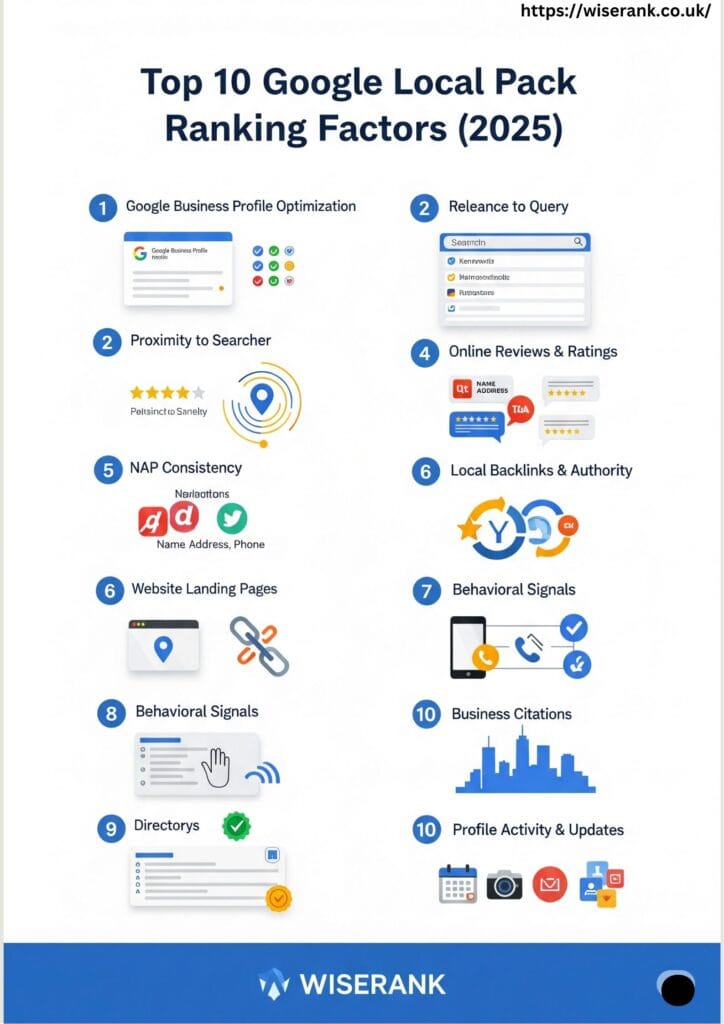
The Top Local Pack Ranking Factors (2025 Edition)
Google uses a mix of proximity, relevance, and prominence to decide which businesses appear in the Local Pack. Here’s a breakdown:
1. Google Business Profile Optimization
Your Google Business Profile (GBP) is the foundation of your local visibility. Optimizations include:
- Complete business information (name, category, phone, website)
- Business description with local keywords
- High-quality images and videos
- Accurate business hours
- Attributes (e.g., wheelchair accessible, women-owned)
Keyword Tip: Use phrases like Google My Business ranking factors and local business profile optimization in your content.
2. Proximity to the Searcher
Google prioritizes businesses that are closer to the searcher’s physical location. This factor is largely out of your control, but optimizing your service area can help. Companies operating in multiple locations should understand service area business SEO to improve local reach.
Keyword Tip: Target geo-targeted service pages and SEO for regional businesses to cover service-based intent.
3. Relevance to the Query
How well your business matches the user’s search. Improve relevance by:
- Choosing the most accurate GBP categories
- Including target services in your description
- Building Local SEO landing pages with location-specific content
Example: A search for “emergency plumber Birmingham” should lead to a landing page optimized for that phrase. Creating local SEO landing pages helps businesses rank for specific services and locations.
4. Online Reviews and Ratings
Google pays attention to:
- Quantity of reviews
- Star ratings
- Keywords used in reviews
- Recency and frequency
Encourage happy customers to leave reviews mentioning the city or service.
Keyword Tip: Use terms like importance of reviews for local rankings and behavioral signals in local SEO. Positive customer feedback plays a major role because customer reviews importance strongly influences local rankings.
5. NAP Consistency Across the Web
Your Name, Address, and Phone Number (NAP) should be consistent across:
- Your website
- GBP
- Directories (Yelp, Bing, Apple Maps)
- Local citations (industry-specific sites)
An inconsistent NAP can confuse Google’s algorithm and hurt your rankings. Many local businesses underestimate how reviews affect local SEO can impact visibility in Google Maps.
Keyword Tip: Mention local citations and NAP consistency as technical ranking signals. Maintaining consistent business details is critical for NAP consistency SEO and local search trust signals.
6. Local Landing Pages & Website Optimization
Google looks at your website as a supporting signal. You can also improve local signals using top citation directories relevant to your industry. Key areas include:
- Geo-optimized meta titles and descriptions
- Location-specific service pages
- Internal linking to local content
- Fast, mobile-friendly performance
Use keywords such as local SEO ranking factors, city-specific SEO pages, and boost local search rankings within your content naturally. Strong site structure and content still matter because on page vs off page factors influence local rankings.
7. Backlinks and Local Authority
Just like traditional SEO, links still matter. Local authority increases when businesses build local link-building relationships with regional websites. Build links from:
- Local news outlets
- Local blogs
- Chambers of commerce
- Local sponsorships
These build prominence—Google’s way of understanding how popular or trusted your business is in the local area.
8. Behavioral Signals
Google also watches how users interact with your listings:
- Click-through rates
- Click-to-call actions
- Request for directions
- Time spent on site
Optimizing for engagement improves your chances of staying in the Local Pack. User engagement in search results is influenced by SERP click through rate and interaction signals.
9. Business Citations and Directory Listings
Citations are online mentions of your business. Tools like Moz Local, BrightLocal, or manual submissions to directories help boost trust. Businesses that follow a local SEO checklist tend to maintain stronger map rankings.
Tip: Prioritize directories that rank well in your industry.
10. Regular Updates and Activity
An active Google Business Profile shows signs of life. Post weekly updates, offers, events, and add new photos frequently.
This tells Google your business is real, relevant, and reliable.
FAQs: Local Pack Ranking Factors
❓ What are the top 3 factors for Local Pack rankings?
- Google Business Profile optimization
- Proximity to the searcher
- Review quality and quantity
❓ Why is my business not ranking in the Local Pack?
You may be lacking relevance, missing local citations, or your Google Business Profile isn’t fully optimized.
❓ How do I improve my local pack visibility?
Build optimized local landing pages, get more 5-star reviews, and ensure NAP consistency across the web.
❓ Does distance affect Local SEO rankings?
Yes. Even if you’re highly relevant, being physically distant from the searcher can reduce your chance of showing up.
Why Choose WiseRank to Improve Your Local Pack Rankings?
At WiseRank, we don’t just optimize websites—we build comprehensive local visibility strategies that dominate the map results.
Here’s how we help:
- Fully optimized Google Business Profile setup
- Local SEO landing page development for each service area
- Local citation building and NAP consistency management
- Review acquisition strategy and engagement tracking
- Local authority backlink campaigns
- Geo-targeted content creation for multi-location businesses
We monitor Google’s ever-evolving algorithm to keep your business ahead in the Local Pack.
Whether you’re a single-location service provider or a national chain, WiseRank crafts tailored local SEO solutions that drive leads and revenue.
Final Thoughts: Local Pack Visibility = Local Business Growth
Ranking in the Google Local Pack isn’t about luck—it’s about sending the right signals to Google consistently across platforms. Ultimately, mastering Google Maps SEO strategies can help businesses dominate local search results.
From Google Business Profile optimization to local landing pages and reputation building, every piece of your local SEO puzzle must align.
Let WiseRank be your trusted partner in climbing the local search ladder. We’ll help you own your map listings, outshine your competitors, and turn local searches into paying customers.
Ready to rank in the Local Pack? Contact WiseRank today and get started.


