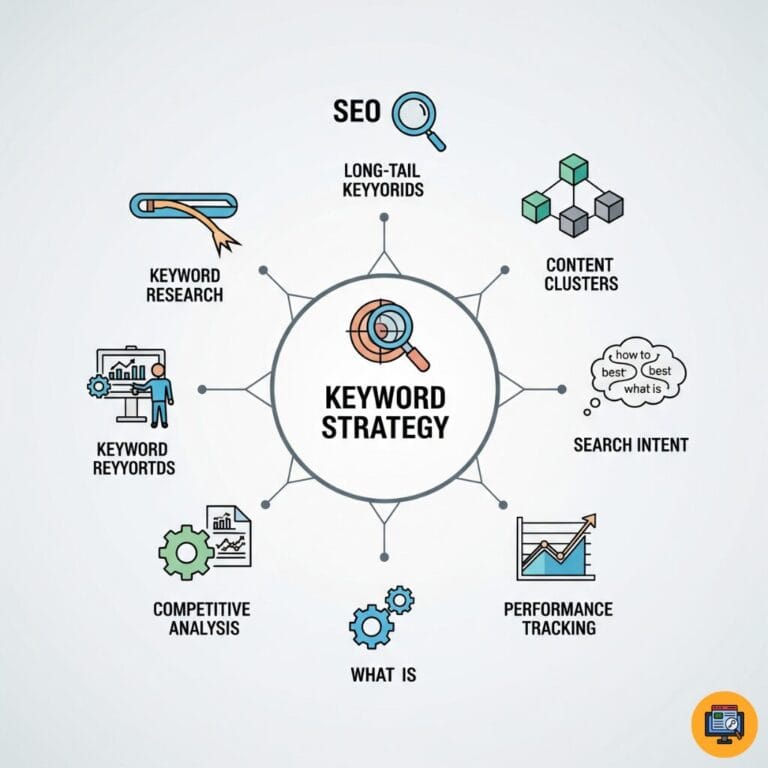
Artificial intelligence is changing how search engines work and how SEO professionals optimize websites. In 2026, AI-powered SEO tools have become essential for creating smarter content, improving visibility, and automating tedious tasks. But not every tool lives up to its promise. This guide explores which AI SEO tools actually deliver results, how they help different parts of your SEO strategy, and how to use them for better rankings. As artificial intelligence reshapes digital marketing, understanding answer engine optimization helps marketers adapt their strategies.
Understanding AI-Powered SEO Tools
AI-powered SEO tools use machine learning, natural language processing (NLP), and automation to help marketers improve search performance. Unlike traditional tools, AI SEO tools don’t just show data—they interpret it, predict outcomes, and even suggest improvements.

What Makes a Tool “AI-Powered”
- Uses machine learning for pattern recognition in search behavior
- Employs NLP to understand user intent and topic relevance
- Automates SEO tasks like audits, keyword clustering, and link analysis
- Provides predictive insights for ranking opportunities
Why AI SEO Tools Matter in 2026
Search algorithms like Google’s Gemini and RankBrain analyze meaning, not just keywords. AI tools help marketers keep pace by optimizing for entities, context, and user intent—critical elements in modern SEO. Search engines increasingly rely on models explained in Google Gemini SEO to understand user intent.
How AI Is Transforming SEO Strategy
AI is transforming SEO by turning guesswork into science. Instead of relying on basic keyword counts, AI reads the meaning behind words, studies user intent, and predicts which content will perform best. This helps businesses reach the right people faster and with more useful content.

Smarter Keyword Research
AI keyword tools go beyond search volume. They identify semantic clusters, intent variations, and ranking probabilities, helping you target terms that real users search in natural language. AI platforms improve keyword discovery through smarter AI keyword research techniques.
Content Optimization with NLP
AI content optimization tools analyze readability, tone, entity coverage, and keyword relevance. This ensures your writing aligns with what Google’s AI models expect from high-quality, human-like content. High-performing AI content strategies are discussed in AI-generated content examples.
Automated Technical Audits
AI site crawlers can detect indexing errors, schema markup issues, and page speed problems instantly. They simulate how search engines interpret your pages—something manual audits often miss. AI tools can automate complex audits that follow technical SEO fundamentals for better site performance. Advanced crawlers help detect issues using technical SEO audit tools and automated reports.
Predictive SEO Insights
AI-driven SEO analytics tools forecast traffic trends, ranking shifts, and CTR performance, giving marketers a chance to act before a drop happens. AI analytics platforms can forecast ranking changes based on SERP click data and behavioral signals.
Best AI SEO Tools That Actually Work in 2026
There are now hundreds of AI SEO tools on the market, but only a few truly make a difference. The best tools combine accurate data, content optimization, and automation to improve rankings without wasting time. Below are some standout tools that have proven results in 2026. Businesses often combine automation with strategy explained in future of AI SEO discussions.

1. Surfer SEO
Surfer combines AI with SERP analysis to recommend how to structure and optimize your content. It identifies keyword density, topic gaps, and content length based on top-ranking pages.
Best for: On-page optimization and content strategy.
2. Jasper AI
Jasper uses generative AI to create SEO-friendly content drafts, product descriptions, and blog outlines. It integrates with Surfer SEO for real-time optimization.
Best for: Fast, high-quality AI writing that follows SEO rules.
3. MarketMuse
MarketMuse focuses on topic modeling and content scoring. It identifies missing subtopics and helps build authority through comprehensive content.
Best for: Content strategy and authority building.
4. Frase.io
Frase uses AI to analyze top-ranking results and generate content briefs, FAQs, and AI-written drafts. It’s particularly strong in semantic keyword mapping.
Best for: Research and AI-powered content planning.
5. NeuronWriter
NeuronWriter leverages NLP for deep content optimization and keyword intent mapping. It provides actionable tips for both beginners and professionals.
Best for: Bloggers and small businesses focusing on long-form content.
6. Semrush AI Features
Semrush now includes AI-driven keyword intent analysis, topic clusters, and backlink scoring. Its AI Writing Assistant checks tone, readability, and SEO alignment.
Best for: All-in-one SEO campaigns and enterprise optimization.
7. Alli AI
Alli AI automates on-page fixes, link management, and keyword placement across your website without needing manual editing.
Best for: Technical SEO automation for agencies and enterprises.
8. GrowthBar
GrowthBar uses OpenAI’s GPT-4 to create optimized blog content and titles automatically. It provides keyword ideas and rank tracking built into the same dashboard.
Best for: Fast-growing startups and content teams.
9. Scalenut
Scalenut’s Cruise Mode generates long-form content that matches user intent using AI analysis of top-performing pages.
Best for: AI-driven storytelling and SERP-aligned articles.
10. WriterZen
WriterZen helps identify keyword clusters, create content maps, and optimize readability through AI suggestions.
Best for: Structured keyword research and topic authority.
Features That Make AI SEO Tools Effective
AI SEO tools are powerful because they do more than automate tasks. They study large amounts of data to reveal what actually works. From keyword clustering to real-time audits, these features make SEO easier, faster, and more accurate for professionals and beginners alike. AI-driven search results are changing discovery through AI search engines and generative answers.
1. Keyword Intelligence
AI tools predict ranking difficulty, search intent, and topic relationships. This helps marketers plan better content around real user questions.
2. Content Quality Scoring
Some tools, like MarketMuse and Surfer, evaluate your article’s content depth and entity coverage against competitors.
3. AI-Powered Link Analysis
Tools like Ahrefs and Semrush integrate AI to detect link spam, domain authority patterns, and anchor text optimization opportunities.
4. Automation and Speed
AI SEO tools save hours by automating keyword research, SERP analysis, and even writing meta tags and schema markup.
5. Integration with Existing Platforms
Top tools now integrate with WordPress, Shopify, and Google Search Console for seamless optimization.
How to Choose the Right AI SEO Tool
Not every AI SEO tool fits every business. Choosing the right one depends on your goals, budget, and level of experience. The best tools offer transparency, measurable results, and real data that help you understand how your site performs and where it can improve.
Evaluate Your Needs
Decide whether you need help with content creation, technical SEO, or analytics. Not every AI tool does everything.
Check Data Accuracy
Reliable AI SEO tools use verified data sources like Google APIs or Semrush databases. Avoid tools that rely on vague metrics.
Test the Workflow
Ensure the tool fits naturally into your SEO workflow and offers transparent outputs—not black-box recommendations.
Consider Long-Term ROI
AI tools are investments. Focus on solutions that combine automation with insight, not just keyword stuffing or auto-writing.
How AI SEO Tools Integrate with Modern Search
Modern search engines like Google Gemini and Bing Copilot now rely on AI to read meaning and context, not just keywords. AI SEO tools help you match this new standard by aligning your site with entity-based ranking, voice search, and AI-driven snippets.
Entity-Based Optimization
Modern AI algorithms focus on entities, not keywords. Tools that help you map entity connections (like WordLift or MarketMuse) are ideal for ranking in AI-powered SERPs. AI ranking systems focus on meaning and entities, a concept explained in semantic search SEO.
Structured Data and Schema
AI SEO tools now automate schema generation. This improves visibility in AI overviews, voice search, and rich snippets. Improving visibility with AI assistants often requires schema markup strategies.
User Intent Matching
AI tools identify informational, transactional, and navigational intent types, helping you create content that fits the query context.
Challenges of AI SEO Tools
Even though AI SEO tools are powerful, they are not perfect. They can produce inaccurate suggestions or generic content if not guided properly. Marketers must balance automation with critical thinking to avoid losing originality or making data-driven mistakes.
1. Over-Reliance on Automation
AI can’t replace human creativity. Relying too much on generated content may lead to generic writing and potential ranking penalties.
2. Data Limitations
AI SEO tools depend on data quality. Poor data or inaccurate intent classification can lead to misguided strategies.
3. Ethical Use and Transparency
Marketers should maintain transparency when using AI-generated content. Ensure that human editors review all AI outputs for accuracy and originality.
How to Combine AI Tools with Human SEO Skills?

AI can automate tasks, but human insight builds connections. Balancing automation and creativity is discussed in AI vs human content comparisons. Use AI for:
- Data collection and SERP analysis
- Topic research and clustering
- Content scoring and readability checks
Then, add human input for:
- Emotional storytelling
- Brand voice consistency
- Strategic decision-making
This balance ensures AI efficiency meets human creativity—a formula Google rewards with higher rankings.
Real-World Case Studies of AI SEO Tools in Action
Many businesses are now using AI-powered SEO tools to streamline their workflow and improve rankings faster. For instance, digital agencies use tools like Surfer SEO and Frase to optimize large volumes of client content based on AI-driven topic analysis. This allows them to maintain consistency and scale without sacrificing quality.
Proven Results from AI SEO Integration
Real case studies show that brands using tools like Jasper AI and MarketMuse have seen up to a 35 percent increase in organic traffic within a few months. These gains come from better keyword targeting, improved on-page optimization, and faster content updates guided by AI insights. The combination of automation and human editing delivers measurable growth and better search visibility.
The Future of AI in SEO
The future of SEO is powered by predictive and generative AI. As search engines evolve into smart assistants, success will depend on how well your content satisfies intent and fits into AI-generated summaries. Businesses that adapt early will lead in visibility and trust.

By 2026, AI SEO tools will move beyond automation toward predictive optimization. They’ll anticipate algorithm updates, identify emerging search patterns, and even rewrite content proactively. The rise of generative AI search engines like Gemini and ChatGPT Search will make entity-first, intent-aware SEO more important than ever.
Conclusion
AI-powered SEO tools are not a passing trend—they’re a new foundation for digital marketing. The key is knowing which tools genuinely work and how to use them wisely. Combine AI-driven data with human creativity to create content that ranks, converts, and builds trust. Ultimately, the future of digital marketing depends on adapting to future of SEO trends powered by AI.