Optimizing SaaS landing pages is one of the most effective ways to increase signups, demo requests, and recurring revenue. However, landing page optimization delivers real results only when it is aligned with a strong SEO foundation. A professional SaaS SEO agency in the UK helps SaaS companies combine conversion rate optimization, search intent targeting, and technical SEO to turn high-quality organic traffic into paying customers and long-term users.
In this guide, we explore actionable strategies, proven techniques, and expert insights to create high-converting SaaS landing pages.

Why SaaS Landing Page Optimization Matters
Even the best SaaS products can struggle to acquire customers if their landing pages are not optimized. SaaS landing page optimization ensures:
- Visitors understand your value proposition quickly
- Key actions like demo requests and free trial signups are easy to complete
- Trust and credibility are established to reduce friction
- The conversion funnel is smooth and intuitive
Benefits of SaaS Landing Page Conversion Optimization
Optimizing SaaS landing pages can lead to measurable results:
- Increased demo request submissions by up to 30%
- Higher free trial conversions
- Lower bounce rates due to improved UX
- Stronger brand authority through persuasive design
- Enhanced SaaS product adoption and retention
Optimizing Landing Page Forms for Maximum Conversions
Landing page forms are the gateway to capturing leads for your SaaS business. Optimizing forms can reduce friction and boost conversion rates significantly.

Key Form Optimization Strategies:
- Keep forms short and ask only for essential information.
- Use multi-step forms to make long forms less intimidating
- Enable auto-fill options to speed up form completion.
- Use clear, compelling CTAs that guide users.
- Apply progressive profiling to collect data gradually over time.
- Conduct A/B tests to see which form layout converts better.
Reducing Friction in Forms
Reducing friction involves simplifying design, limiting required fields, and avoiding unnecessary pop-ups that distract users.
Call-to-Action Placement and Wording
CTAs should be prominently displayed above the fold and use action-oriented, benefit-driven wording like “Start Free Trial” or “Get Instant Access.”
Mobile-Friendly Form Design
Ensure forms are fully responsive, with large input fields and touch-friendly buttons for mobile users.
Optimizing forms not only improves conversions but also enhances the user experience, making visitors more likely to engage with your SaaS product.
Core Elements of High-Converting SaaS Landing Pages
A high-performing SaaS landing page integrates design, UX, messaging, and technical optimization. Focusing on key elements can drastically improve conversions.
Clear Value Proposition and Headline Messaging
Your headline must immediately convey what your SaaS product does and the benefits for the user.
Best practices include:
- Keep headlines concise and benefit-driven
- Use subheadings to clarify unique features
- Highlight the problem solved or outcome achieved
Example: “Boost Team Productivity by 50% with Our Task Management Platform”
Persuasive Call to Action (CTA) Design
A CTA drives the desired user action. Placement, color, text, and surrounding whitespace are critical.
Key strategies:
- Place CTAs above the fold for immediate visibility
- Use action-oriented language like “Start Free Trial” or “Request Demo.”
- Test CTA variations using A/B testing for optimal results
Social Proof and Trust Signals
SaaS landing pages benefit from showcasing credibility and trust.
Implementations include:
- Customer testimonials and logos
- Reviews from platforms like G2, Capterra, or Trustpilot
- Security badges, GDPR compliance, and SSL certificates
These elements reduce user hesitation and improve SaaS signup page conversions.
Optimized Landing Page UX
User experience plays a pivotal role in conversion. Poor UX leads to frustration and lost opportunities. Following established usability principles, such as those defined by the Nielsen Norman Group, helps SaaS landing pages reduce friction and improve task completion rates.
Key UX considerations:
- Simple and intuitive navigation
- Minimal form fields for lead capture
- Mobile-responsive design
- Fast page load times to meet Core Web Vitals standards
Effective Use of Visual Hierarchy
Visual hierarchy guides users naturally through content.
Tips include:
- Highlight key elements with size and color contrasts
- Use whitespace strategically to reduce clutter
- Incorporate directional cues like arrows or images pointing to CTAs
Leveraging Analytics and Heatmaps to Improve SaaS Landing Pages
Understanding user behavior is critical for improving landing page performance. Analytics and heatmaps reveal what visitors see, click, and ignore.

Tools to Track User Behavior
- Hotjar and Crazy Egg for click and scroll tracking.
- Google Analytics for traffic, bounce rate, and engagement metrics.
- Session recordings to observe real user interactions.
Analyzing Scroll Depth and Click Patterns
Scroll depth shows how far users go on a page. Click patterns identify which CTAs and elements attract attention. Adjust layouts based on these insights.
Using Data to Refine UX and Content
- Move high-performing CTAs to more visible locations.
- Remove or revise sections where users drop off.
- Test alternative headlines, images, and value propositions.
By leveraging analytics and heatmaps, you can make data-driven decisions to refine landing pages and improve conversion rates consistently.
Conversion Rate Optimization Strategies for SaaS
CRO is the process of improving landing page elements to increase the percentage of visitors who take action.
A/B and Multivariate Testing
Testing is the backbone of SaaS landing page optimization.
Steps:
- Identify elements to test, such as headlines, CTA buttons, and images
- Run A/B tests to compare variations
- Use multivariate testing for multiple changes at once
- Analyze results and implement the winning versions
Example: A SaaS startup tested CTA copy and increased demo requests by 20%.
Personalization and Dynamic Content
Tailored experiences resonate more with visitors.
Techniques:
- Dynamic text based on visitor location, behavior, or industry
- Personalized offers for returning users
- Content tailored to the user’s stage in the SaaS conversion funnel
Reducing Friction and Form Optimization
Complex or long forms decrease conversions.
Strategies:
- Limit required fields to essentials
- Enable auto-fill options
- Offer multiple sign-up options like social logins
- Break long forms into steps with progress indicators
Effective Use of Visual and Video Content
Visual content increases engagement and understanding.
Tips:
- Use product demo videos to explain features
- Add screenshots showing the SaaS workflow or dashboard
- Incorporate graphics to illustrate benefits and outcomes
Landing Page Copywriting for SaaS
Clear, persuasive copy keeps users engaged.
Recommendations:
- Focus on benefits, not just features
- Use bullet points for scannability
- Include numbers or statistics to support claims
- Match tone and language to your target audience
Personalization and Targeting Strategies for Higher Engagement
Personalized experiences help users feel understood and increase the likelihood of conversion. SaaS landing pages benefit from dynamic content and targeted messaging.

AI-Powered Personalization
- Show content or offers based on user behavior, demographics, or past interactions.
- Use recommendation engines for feature suggestions or content resources.
Dynamic Content and Behavioral Segmentation
- Adjust headlines, CTAs, or images based on visitor segment.
- Segment visitors by industry, location, or stage in the buyer journey.
Retargeting and Tailored Onboarding
- Use retargeting ads for users who did not convert initially.
- Personalize onboarding flows to match the user’s needs and role.
Personalization makes your landing pages more relevant, boosts engagement, and increases the likelihood of trial sign-ups and demo requests.
Technical and Performance Optimization for SaaS Landing Pages
Performance directly affects conversions. Even minor delays or errors can drive potential customers away.
Page Speed and Core Web Vitals
Page speed influences user satisfaction and Google rankings. Page speed directly impacts user experience, conversions, and rankings, which is why SaaS teams should regularly audit performance using tools like Google PageSpeed Insights.
Best practices:
- Optimize images and videos
- Use lazy loading for offscreen elements
- Leverage Content Delivery Networks (CDN)
- Minify CSS, JavaScript, and HTML
Mobile Optimization and Responsive Design
With the rapid shift toward mobile usage, SaaS businesses can no longer treat mobile optimization as optional. A significant portion of users now discover, evaluate, and sign up for SaaS products directly from smartphones and tablets. Poor mobile experience leads to higher bounce rates, lower engagement, and lost conversions. Implementing proven mobile SEO strategies for SaaS ensures responsive design, faster load times, and friction-free mobile journeys that improve both search rankings and conversion rates.
Focus areas:
- Ensure all elements scale correctly on different devices
- Simplify mobile forms and CTAs
- Test on various screen sizes to confirm functionality
SEO for SaaS Landing Pages
While optimizing for conversions, do not ignore search engine optimization.
SEO techniques:
- Use high-intent keywords in headings and content
- Optimize meta tags and descriptions
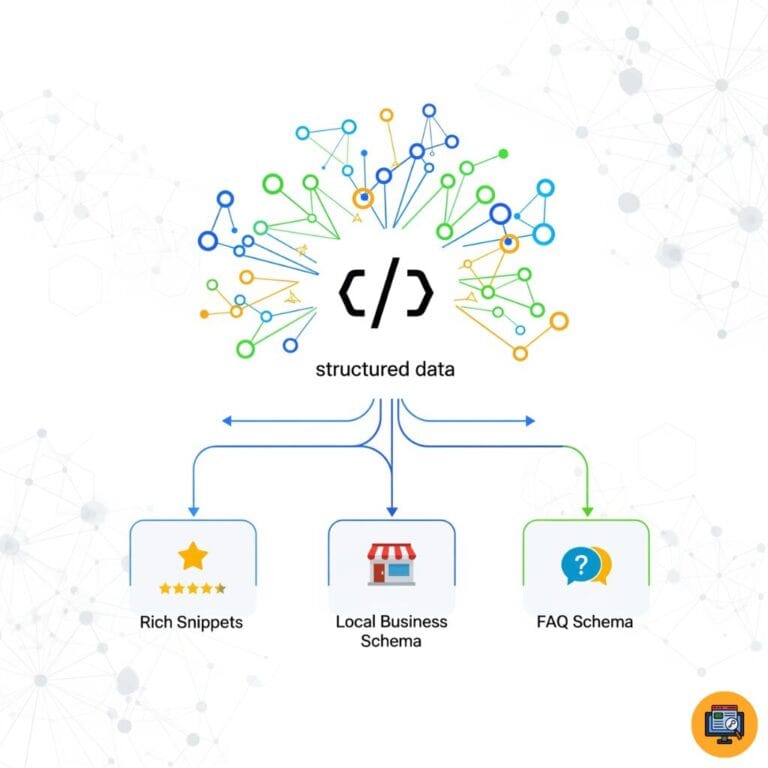
- Implement structured data for enhanced SERP listings
- Ensure clean URL structures and proper canonicalization
Analytics and Measurement
Continuous improvement requires data tracking and analysis.

Conversion Tracking
Track the performance of your landing pages using:
- Google Analytics GA4 for user behavior
- Google Tag Manager for events and triggers
- Funnel visualization to monitor drop-offs
Engagement Metrics
Analyze metrics such as:
- Bounce rate
- Average time on page
- Scroll depth
- Form submissions and CTA clicks
Iterative Optimization
Use data insights to make continuous improvements:
- Update copy, CTAs, and visuals based on performance
- Test new personalization strategies
- Refine user flows and reduce friction
Advanced Strategies for SaaS Landing Page Conversions
AI-Powered Personalization
Leverage AI to deliver tailored content and recommendations:
- Predictive content blocks based on user behavior
- Smart CTAs that adjust based on visitor profile
- Personalized onboarding suggestions
Behavioral Targeting and Retargeting
Track user behavior and retarget with relevant messaging:
- Show targeted offers for users who abandoned free trial signups
- Use dynamic content blocks to match user intent
- Encourage upsells and demo requests
Real-Life Examples of High-Converting SaaS Landing Pages
- Slack: Clean design, clear value proposition, and simple signup form
- Dropbox: Focused headline, trust signals, and persuasive visuals
- HubSpot: Free tools offer, strong CTA, and educational content for lead nurturing
Common Mistakes to Avoid
Many SaaS companies fail to achieve consistent growth because they repeat the same optimization errors across their websites and landing pages. Issues such as cluttered layouts, unclear calls to action, slow-loading pages, poor mobile experience, and missing trust signals can significantly reduce conversions and organic visibility. Understanding and fixing these issues early is essential for scalable growth, which is why identifying and avoiding common SaaS SEO mistakes plays a critical role in improving rankings, user experience, and lead generation.

- Overloading landing pages with too much information
- Confusing CTA placement or wording
- Slow loading pages with heavy scripts
- Ignoring mobile optimization and UX
- Lack of trust signals or social proof
Final Thoughts on SaaS Landing Page Optimization
Optimizing SaaS landing pages is an ongoing process requiring strategic design, persuasive copy, technical optimization, and continuous testing. Implementing these best practices increases conversion rates, demo requests, free trial signups, and overall SaaS product adoption. By combining CRO strategies with UX improvements, trust-building, and analytics, your SaaS business can achieve sustainable growth and maximize ROI.