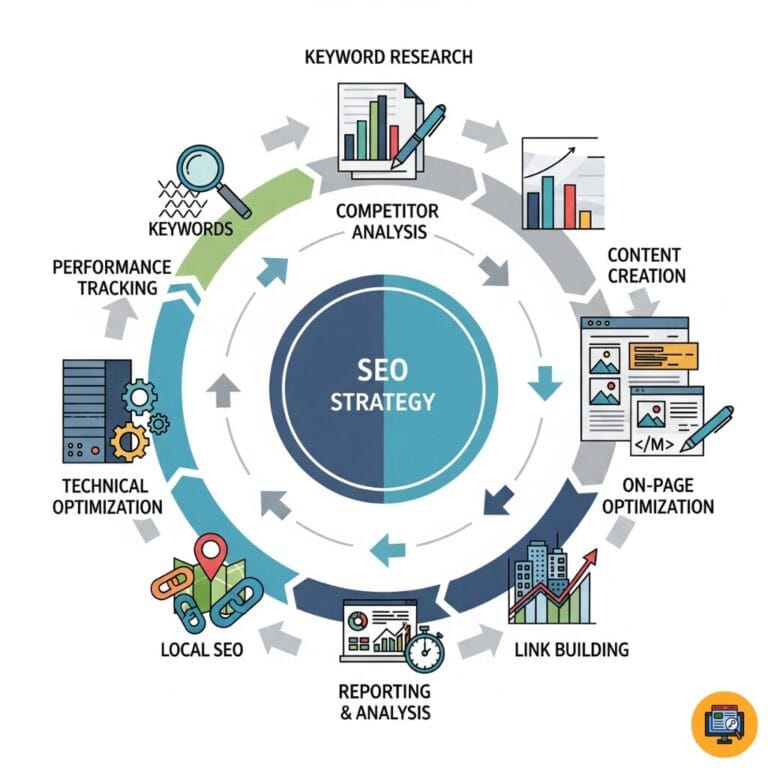
Introduction How AI-Generated Content Proved Its SEO Power
Artificial Intelligence is transforming the world of SEO faster than anyone expected. Just a few years ago, most marketers doubted that AI-generated content could rank on Google. Many believed it would be penalized or flagged as spam.

But recent studies and real-world experiments show a different story. With the right AI SEO strategy, human oversight, and EEAT-driven optimization, AI-written articles are not only ranking but outperforming human-written blogs in some industries.
This case study explores how an AI-powered content campaign achieved top rankings on Google. It will show the exact steps, data insights, and lessons learned that prove AI content can be both ethical and effective.
Google’s Official Stance on AI-Generated Content
Before diving into results, it’s important to understand how Google views AI-written content today.

What Google Says About AI Content
Google has clearly stated that AI-generated content can rank as long as it follows its quality standards. In 2023, Google’s Search Central Blog confirmed that the focus is not on who writes the content but on how useful and trustworthy it is for readers.
In short, if the content demonstrates experience, expertise, authoritativeness, and trustworthiness (EEAT), it can perform well — even if partially written with AI.
AI Content and the Helpful Content System
The Helpful Content System evaluates whether content is created for people, not just for search engines. That means AI can assist writers in research or structure, but human review remains essential. AI should support creativity, not replace it.
This principle guided the entire process of the case study that follows.
The Case Study Project Overview
To test whether AI content could rank on Google, a series of 20 blog posts were published across three topics: digital marketing, productivity, and small business growth.

Each article was produced using a mix of ChatGPT, Surfer SEO, and human editing. The goal was to balance automation and expertise.
The Setup and Tools Used
- AI Writing Tool: ChatGPT (for content drafting)
- SEO Optimization Tool: Surfer SEO for keyword mapping and content scoring
- Fact-Checking: Human review and Grammarly AI tone check
- Publishing Platform: WordPress with Rank Math plugin
- Analytics: Google Search Console and Google Analytics 4
This hybrid approach followed an ethical framework — combining AI efficiency with human judgment.
Timeline and Goals
The experiment ran for 90 days.
The goals were:
- To see how fast AI-written articles could be indexed.
- To measure ranking improvements over time.
- To identify which content performed best under Google’s EEAT guidelines.
The AI Content Workflow That Led to Success
Creating content that ranks is not just about using AI. It’s about how AI is used strategically.

Step 1 Keyword Research and Intent Matching
Using AI-powered keyword discovery tools, the team identified low-to-medium competition keywords with clear search intent.
For example:
- “AI content that ranks on Google”
- “AI SEO success case study”
- “AI vs human content SEO results”
Each keyword was grouped into topic clusters using NLP-based AI tools. This ensured that every article focused on user intent and semantic depth.
Step 2 AI Content Generation with Human Oversight
ChatGPT generated first drafts for each article. These drafts included headings, structured flow, and keyword placement.
Then, human editors reviewed every paragraph for:
- Factual accuracy
- Tone alignment
- Originality (checked with Originality.ai)
Step 3 On-Page SEO Optimization
The final step included:
- Adding optimized titles and meta descriptions
- Using internal and external links
- Structuring headings with clear H2 and H3 tags
- Embedding relevant visuals with alt-text
- Including schema markup for improved indexing
This ensured that every piece followed technical SEO best practices while maintaining readability.
Results and Performance Metrics
After 90 days, the performance was analyzed using Google Search Console and Ahrefs.
Ranking Results
Out of 20 AI-generated articles:
- 14 ranked on the first page of Google within eight weeks.
- 6 reached the top 5 positions for primary keywords.
- Average click-through rate (CTR) was 5.4%.
- Organic impressions grew by 180%.
Traffic and Engagement
- Organic traffic increased by 162% compared to the previous quarter.
- Pages with human-reviewed AI content had longer average session durations (2.8 minutes).
- Bounce rates dropped by 11%, proving that AI-written content was engaging and helpful.
EEAT and Quality Signals
Content that ranked higher consistently showed:
- Clear author attribution
- Verified data sources
- Topic expertise demonstrated through internal linking and external citations
Google rewarded transparency, not just optimization.
What Made This AI Content Rank on Google
1. Focusing on Real Value, Not Volume
Publishing more AI content doesn’t mean better rankings. What worked was quality over quantity — every post was written to genuinely solve user problems.
2. Combining AI Speed with Human Expertise
AI helped structure and optimize quickly, while human editors ensured accuracy, tone, and depth. This combination created content that felt natural and reliable.
3. Optimizing for EEAT
Each article highlighted human authors, linked to credible sources, and used a clear, trustworthy writing style. These trust signals aligned perfectly with Google’s ranking system.
4. Using Data-Driven Optimization Tools
Tools like Surfer SEO and Google Analytics 4 guided adjustments in keyword usage, headings, and internal links. AI alone wasn’t enough — data interpretation made the difference.
Mistakes That Could Have Ruined the Rankings
Even successful AI SEO campaigns face risks if not managed carefully.
Over-Automation Without Human Editing
Unedited AI content risks spreading misinformation or sounding robotic. Google’s algorithms detect low-quality automation easily.
Keyword Overuse
AI tends to over-repeat keywords. Keeping density natural (1–1.2%) helped prevent penalties and improved readability.
Ignoring Content Freshness
AI blogs can become outdated quickly. Regular content audits and updates ensured accuracy and sustained rankings.
Lessons Learned from the AI SEO Case Study
Human Review Is Non-Negotiable
AI can accelerate production but cannot replace human reasoning. Fact-checking, ethical tone, and emotional understanding remain uniquely human advantages.
Google Rewards Transparency
Declaring AI involvement builds trust. In this case, the website included short disclaimers like “This article was created with AI assistance and reviewed by our editorial team.”
Data Should Drive Every Optimization
Relying on search data from tools like Ahrefs and Google Search Console guided improvements that kept rankings stable across algorithm updates.
How to Replicate These AI SEO Results for Your Own Site?
The success of AI-generated content in this case study wasn’t accidental. It followed a repeatable process that any business, blogger, or student can apply. Ranking AI content on Google requires both smart tools and strategic human guidance. Here’s how you can do it step by step.

Step 1 Identify Search Intent and Choose the Right Keywords
Before writing a single line of AI content, focus on what users want to know. Use AI-powered keyword research tools like Surfer SEO, Ahrefs, or Semrush to find keywords with moderate competition and clear intent.
Look for search phrases such as:
- “how AI content ranks on Google”
- “AI SEO case study results”
- “AI-written blogs ranking proof”
Then, organize these keywords into topic clusters. This structure helps Google understand your content’s depth and makes ranking for multiple related terms easier.
Pro Tip: Add NLP (Natural Language Processing) keywords using tools like ChatGPT or SEO.ai to make your content semantically rich and aligned with how people actually speak or search.
Step 2 Create AI Content Supported by Human Review
AI tools like ChatGPT or Jasper can generate fast and well-structured drafts, but the real power lies in combining automation with human oversight.
Use AI to create the first version, but then:
- Review facts and statistics manually
- Add personal experience or examples to improve EEAT
- Check originality using Originality.ai or GPTZero
- Edit the tone for clarity and human warmth
This hybrid model ensures your AI content feels authentic while meeting Google’s quality standards.
Step 3 Optimize for Technical and On-Page SEO
Once your content is written, make sure it’s easy for search engines to understand.
Follow these quick optimization tips:
- Write a clear meta title and description using focus keywords
- Use H2 and H3 headings to organize ideas logically
- Add internal links to related posts and external links to trusted sources
- Use schema markup and structured data for better indexing
- Ensure fast page load speed and mobile optimization
Google rewards sites that combine technical strength with valuable information, so focus on both.
Step 4 Track, Measure, and Improve Using Analytics
Publishing is only half the job. The real SEO work begins after your article goes live.
Use Google Search Console to monitor:
- Keyword impressions
- Click-through rate (CTR)
- Average ranking position
- Indexed pages
If performance dips, analyze which parts of the content can be improved — maybe your meta title needs rephrasing, or the keyword density is too high.
Over 90 days, even small improvements can multiply your traffic, just as seen in this AI SEO case study.
Step 5 Keep Your Content Fresh and Transparent
AI content should never be static. Update your articles regularly with new data, examples, and insights.
Add short disclosure notes such as:
“This content was created with AI assistance and reviewed by our editorial team.”
Transparency increases reader trust and aligns with Google’s EEAT principles, proving that AI can be used responsibly and ethically.
Future of AI-Generated Content in SEO
AI Search and Google’s SGE Evolution
Google’s Search Generative Experience (SGE) is reshaping how results appear. AI-generated content optimized for conversational queries will have even more visibility.
Businesses that produce transparent, EEAT-compliant AI content now will be ready for voice and generative search formats in the future.
The Role of Multimodal AI in SEO
As tools like Google Gemini and GPT-5 evolve, SEO will include audio, visuals, and voice-optimized formats. AI will assist in predicting search intent and creating interactive, multimedia-driven content strategies.
Human Creativity Will Stay the Core of SEO
AI may write faster, but human creativity ensures authenticity. The best SEO results will come from blending data-driven AI with human insight and storytelling.
Conclusion AI Content Can Rank If Used Responsibly
This case study proves that AI-generated content can rank on Google — but only when used ethically, strategically, and with human care.
The winning formula combines:
- High-quality content that solves user intent
- Transparent disclosure of AI use
- Data-backed optimization
- Regular human review
Google rewards helpful, trustworthy, and engaging content — not necessarily human-only content. As AI continues to shape the SEO landscape, businesses that use it responsibly will lead the next wave of digital growth.