What Are Google Algorithm Updates
Google algorithm updates are changes in how Google ranks and displays websites in its search results. These updates are designed to improve user experience, remove spam, and make sure only high-quality, trustworthy content appears on top.

Each year, Google makes thousands of small changes and several core updates that can significantly shift rankings across industries.
For example, a site that ranked first last month might drop after a Google core update if its content doesn’t meet new quality standards.
Why Google Algorithm Updates Matter for SEO
Every Google update changes how the search engine evaluates websites.
For SEO professionals and business owners, understanding these updates helps:

- Maintain stable rankings during fluctuations
- Fix technical and content-related issues early
- Improve user trust and visibility
- Protect from spam penalties or ranking drops
Ignoring updates can mean losing months of traffic and revenue. Staying informed means staying competitive.
Types of Google Algorithm Updates
Google releases different kinds of updates throughout the year. Here are the most important ones that shape the search landscape in 2025:
1. Google Core Update 2025
Core updates are broad changes that affect how Google evaluates relevance, content quality, and EEAT (Experience, Expertise, Authority, Trust). They often target websites with thin, outdated, or low-value content.
Key highlights:
- Google uses advanced AI models like Gemini to understand context better
- Sites with clear topical authority perform better
- User experience metrics (Core Web Vitals) play a bigger role
If you want an in-depth analysis, check our guide on <a href=”URL-YAHAN-AAYEGI”>Google Core Update 2025</a>.
2. Google Helpful Content Update
This update focuses on rewarding content written for people, not search engines.
Pages overloaded with keywords or AI-generated fluff often lose rankings.

To stay safe:
- Write original, experience-based content
- Avoid repeating the same keywords unnecessarily
- Keep your content up-to-date
Full breakdown in our detailed guide <a href=”URL-YAHAN-AAYEGI”>Google Helpful Content Update</a>.
3. Google Spam Update
The Spam update targets manipulative SEO tactics like keyword stuffing, link schemes, and hidden redirects. If your site uses low-quality backlinks or copied content, this update can hit hard.
To recover:
- Disavow toxic backlinks
- Clean up duplicate or spammy pages
- Use white-hat SEO practices
Learn recovery steps in <a href=”URL-YAHAN-AAYEGI”>Google Spam Update</a>.
4. March 2025 Algorithm Update
The March 2025 update brought noticeable ranking shifts across news, health, and ecommerce sectors. It emphasized EEAT signals, authorship, and structured data accuracy.
Winners: Websites with expert authors, transparent sourcing, and fast mobile pages.
Losers: Sites using AI-generated content without real expertise.
Early analysis in <a href=”URL-YAHAN-AAYEGI”>March 2025 Algorithm Update</a>.
5. Google Core Web Vitals Update
Google’s Core Web Vitals measure how fast and stable your site feels to users.
In 2025, a new metric, Interaction to Next Paint (INP), replaced FID as part of the update.
Main metrics to optimize:
- Largest Contentful Paint (LCP)
- Cumulative Layout Shift (CLS)
- Interaction to Next Paint (INP)
Detailed technical SEO improvements are covered in <a href=”URL-YAHAN-AAYEGI”>Core Web Vitals Update</a>.
6. AI and Search Google Gemini Update

AI has changed how Google ranks and displays information. The Google Gemini system powers AI Overviews, offering summarized answers directly in SERPs. This means fewer clicks but more opportunities for visibility through structured data and content authority.
Learn how AI impacts rankings in <a href=”URL-YAHAN-AAYEGI”>AI and Search in 2025</a>.
7. Mobile-First Indexing Final Rollout
Mobile-first indexing is now complete. Google uses the mobile version of your site for ranking and indexing.
To stay compliant:
- Ensure mobile responsiveness
- Match mobile and desktop content
- Avoid blocked scripts or large pop-ups
Read how this affects SEO in <a href=”URL-YAHAN-AAYEGI”>Mobile-First Indexing 2025</a>.
8. Google EEAT Update
EEAT — Experience, Expertise, Authority, Trust — is not a single algorithm update but a guiding principle across all Google systems.Sites that show author transparency, expert insights, and source credibility perform best.
Example: A medical article written by a verified doctor will outrank a generic AI-generated blog.
Learn how to strengthen your EEAT signals in <a href=”URL-YAHAN-AAYEGI”>Google EEAT Update</a>.
9. SERP Layout Changes in 2025
Google is testing continuous scrolling, larger featured snippets, and visual search elements. These changes affect click-through rates (CTR) and organic visibility.
Tip: Optimize meta titles and structured data to appear in People Also Ask (PAA) and AI Overviews.
Explore SERP feature changes in <a href=”URL-YAHAN-AAYEGI”>SERP Layout Changes 2025</a>.
10. AI Overviews and Organic Clicks
AI Overviews are summaries Google generates using AI (part of SGE).
They can reduce traditional organic traffic but increase brand exposure.
To appear in AI Overviews:
- Use structured data
- Write clear, factual answers
- Build topical authority
See our detailed insights in <a href=”URL-YAHAN-AAYEGI”>Google AI Overviews</a>.
11. Structured Data and Rich Snippets Update
Structured data helps Google understand your content. Recent updates focus on validating schema types like FAQ, HowTo, and Review schema. If your schema has errors, your snippets may disappear.
Optimize your schema with guidance from <a href=”URL-YAHAN-AAYEGI”>Structured Data Update</a>.
12. Video SEO and Multimedia Focus
Google increasingly rewards websites using videos, images, and interactive media.
Video schema, captions, and transcripts now contribute to search visibility.
Actionable tips:
- Add transcripts for accessibility
- Embed YouTube videos with structured markup
- Optimize thumbnails for CTR
Learn more at <a href=”URL-YAHAN-AAYEGI”>Video SEO 2025</a>.
13. Passage Indexing and Content Depth
Google’s Passage Indexing can rank individual sections of your article if they provide clear, relevant answers.
To benefit:
- Use descriptive H2/H3 subheadings
- Structure articles with jump links or TOCs
- Write concise, informative paragraphs
More insights at <a href=”URL-YAHAN-AAYEGI”>Passage Indexing Guide</a>.
14. Continuous Scrolling in SERPs
With continuous scrolling, users can browse search results without clicking “next page.” This changes click behavior — lower-ranked pages may gain more impressions but fewer CTRs.
To adapt:
- Strengthen your meta titles and featured snippet appeal
- Optimize for position zero (featured results)
Complete overview at <a href=”URL-YAHAN-AAYEGI”>Continuous Scrolling Update</a>.
15. Local SEO Update 2025
Google made major updates to Google Business Profile (GBP) listings.
It now emphasizes reviews, images, service categories, and user engagement.

Local SEO optimization tips:
- Keep NAP consistent (Name, Address, Phone)
- Encourage real reviews
- Update service areas regularly
Read full local insights at <a href=”URL-YAHAN-AAYEGI”>Local SEO Update 2025</a>.
How to Recover from a Google Algorithm Update?
If your site loses traffic after an update, don’t panic. Follow this recovery process:
- Audit your website: Check Search Console for errors or indexing issues.
- Evaluate content quality: Remove thin or duplicate content.
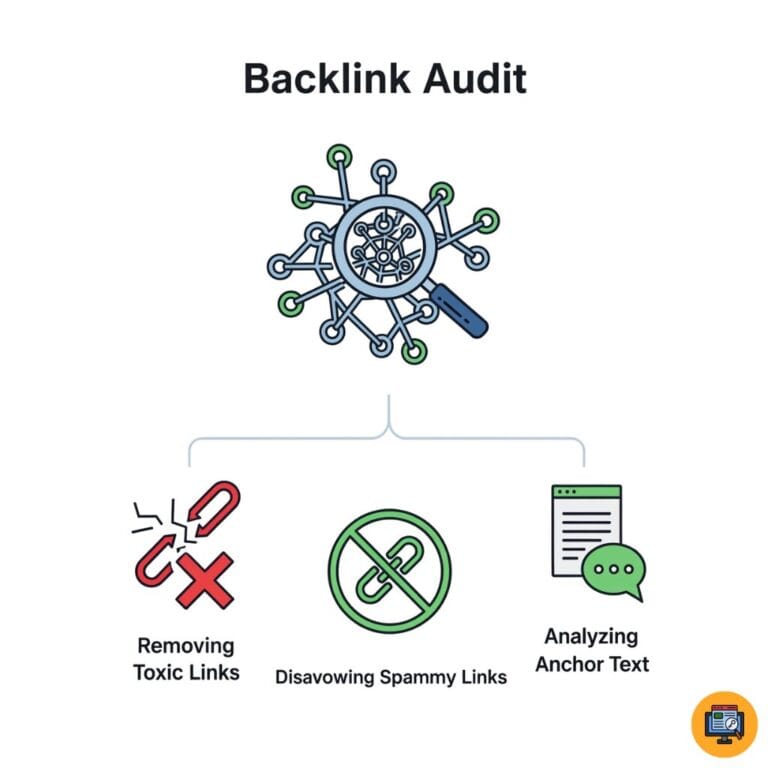
- Analyze backlinks: Disavow toxic or irrelevant links.
- Improve site performance: Optimize Core Web Vitals and mobile speed.
- Rebuild trust: Add author bios, credible references, and schema markup.
A full step-by-step recovery plan is in <a href=”URL-YAHAN-AAYEGI”>Algorithm Update Recovery Guide</a>.
How Google Uses AI and Machine Learning to Rank Content?
Google’s search algorithm is no longer just a set of rules — it’s an intelligent system powered by AI and machine learning models that learn how people search, what they expect, and which pages best meet that intent.
AI Models That Shape Rankings
Google relies on several machine-learning systems to refine results:
- RankBrain helps interpret the meaning behind search queries, especially ones Google hasn’t seen before.
- BERT (Bidirectional Encoder Representations from Transformers) understands context within sentences, improving how Google matches pages to intent.
- MUM (Multitask Unified Model) can process text, images, and even videos to deliver deeper, more accurate search results.
- Gemini, Google’s latest AI model, powers features like AI Overviews, blending natural-language summaries with web citations.
Why This Matters for SEO?
Machine learning constantly updates Google’s understanding of quality. Instead of counting keywords, it now evaluates:
- Topical depth and expertise within your niche
- EEAT signals (Experience, Expertise, Authority, Trustworthiness)
- Behavioral data such as dwell time, click satisfaction, and engagement
- Entity clarity — how well your site is connected to recognized concepts and experts
If your content answers real questions clearly, uses structured data, and aligns with user intent, Google’s AI is more likely to feature it in results or even in AI-generated summaries.
How to Align Your Content with Google’s AI
- Focus on human-first writing backed by data and experience.
- Build topic clusters around your expertise to help Google’s models understand your authority.
- Use schema markup and clear headings so AI can extract meaning easily.
- Keep content fresh and update older posts with new examples or stats.
- Test pages in Search Console to track how Google interprets and ranks them.
As Google’s AI evolves, success comes from creating content that teaches, informs, and helps — not just ranks.
Tools to Monitor Google Algorithm Updates
To stay ahead, use reliable monitoring tools that track ranking fluctuations:
- Google Search Status Dashboard (official update confirmation)
- Semrush Sensor (SERP volatility tracking)
- MozCast (daily ranking temperature)
- Algoroo (update tracking for agencies)
- Rank Math Analytics (site-level SEO impact)
Future of Google Algorithm Updates
In 2025 and beyond, Google’s updates are expected to rely even more on AI, user intent, and experience quality.

Upcoming trends include:
- Generative Engine Optimization (GEO) for AI searches
- Personalized SERPs based on user behavior
- Expanded EEAT integration across all niches
- Greater importance of author identity verification
- Reduction in traditional blue-link results
Final Thoughts
Google algorithm updates will keep evolving — but the goal remains the same: reward websites that provide real value. If you focus on technical excellence, original content, and user trust, every update can be an opportunity instead of a threat.Keep your site updated, track every change, and adapt early — because in 2025, SEO belongs to websites built for people, not just algorithms.